Meet Jollyquill: The Script Font with a Natural, Confident Flow
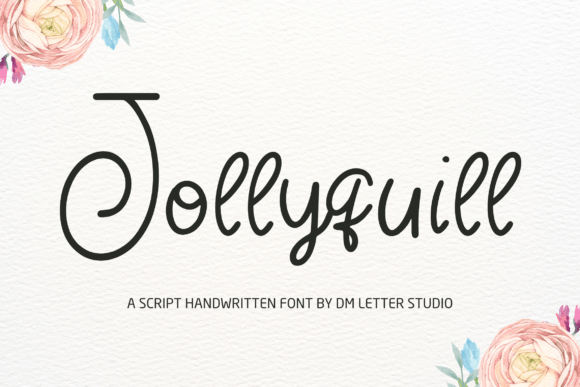
There’s a particular quality to handwriting that feels assured. It’s not overly precise or stiff, but it flows with a natural, confident rhythm. This is the essence of Jollyquill, a script font designed to capture the lively charm of real pen lettering. Each character connects smoothly to the next, creating words that feel personal, warm, and genuinely expressive. It’s a typeface that doesn’t just sit on the page; it communicates a feeling of joy and approachability.
A Font for Personal and Professional Connection
Jollyquill’s strength lies in its versatility across projects where a human touch is essential. As a display font, it excels in headlines and short phrases, immediately setting a friendly tone. Think of a boutique’s logo, the header on a wedding invitation, or the title on a greeting card. Its flowing connections give these elements a cohesive, handmade quality that feels premium without pretension.
For brand identity, particularly for small businesses, lifestyle brands, and creative entrepreneurs, this script font offers a powerful way to inject personality. A logo set in Jollyquill feels approachable and creative. It works beautifully on packaging, from artisanal food labels to cosmetic boxes, where it can communicate care and craftsmanship. On social media graphics, it helps quotes, announcements, and promotional posts stand out in a feed, adding a layer of visual warmth that static, geometric fonts often lack.
In editorial design and web design, Jollyquill should be used strategically. It’s not a workhorse for body text but shines for pull quotes, chapter titles, and call-to-action buttons where you want to guide the reader’s eye and evoke emotion. Its readability at larger sizes is excellent, but testing it at the intended scale is always a practical step.
Practical Guidance for Using This Handwritten Font
Integrating a creative font like Jollyquill into your projects involves a few key considerations. First, evaluate its fit. It’s ideal for designs that benefit from a handwritten font aesthetic—think invitations, planners, lifestyle blogs, and product packaging. It may be less suitable for technical documents or lengthy digital articles where a sans serif font or serif font ensures optimal legibility.
Next, consider font pairing. Jollyquill’s organic curves create a beautiful contrast with clean, simple typefaces. Pair it with a neutral sans serif font for body copy in a brochure, or with a classic serif font for elegant stationery. This contrast creates clear visual hierarchy, allowing Jollyquill to headline while the supporting text remains easy to read. Testing these combinations in your actual design software—whether it’s Canva, Photoshop, or Illustrator—is crucial to see how the weights and spacing interact.
When you work with Jollyquill, pay attention to spacing. Because of its connected nature, slightly adjusting letter spacing or line height can enhance flow, especially in longer phrases. Its balanced stroke weight ensures it reproduces cleanly across various print methods, including stickers, sublimation, and DTF transfers, making it a reliable asset for crafters and product makers. Always review the included glyphs and alternates; many premium fonts offer stylistic options that can add unique flair to specific letters.
Finally, understand the licensing. If you’re using Jollyquill for commercial projects—client work, merchandise, or digital products—ensure your license covers that use. This is a standard step for any commercial font and protects both your business and the font creator’s work.
Bringing Joyful Typography to Your Work
The real value of a typeface like Jollyquill is in the response it elicits. It can make a brand feel more relatable, an invitation more exciting, and a social media post more engaging. By using this script handwriting font thoughtfully, you’re not just choosing a style; you’re crafting an experience. It’s a design asset that helps translate a feeling—of celebration, of care, of creativity—directly into your visual communication, connecting with your audience on a more personal level.